

Artist’s Rendition of String Theory’s “Calabi-Yau Manifold “
Mysteries of Modern Physics
(Essay #17, at 6-24-25)
Note: In this Essay, we used Wikipedia and Perlexity.ai for our research. Perplexity.ai is a conversational search engine. We did not include traditional numbered footnotes at the bottom of this Essay. Readers can find the footnoted sources within Wikipedia’s articles and/or within Perplexity.ai’s question-and-answer sections, all of which are available online. — JXM
In this book of Essays about Nature’s Path of Continuing Creation, we’ve discussed Natural Patterns, Geology, Mathematics, Chemistry, and Biology. We’ve emphasized chemistry and biology because our main concern is with Natural Life. But all those sciences stand on the foundation of Physics. So, we need to say a few things about Physics here in this Essay #17.
Physics can be both difficult and mysterious for people who have not thoroughly studied it. Physics has a number of phenomena that defy human “common sense.” Additionally, physics relies heavily on advanced mathematics, whereas our book, Nature’s Path of Continuing Creation, is not intended for readers with advanced mathematical skills.
Classical (Newtonian) Physics
There are two general types of physics. The older type, “Classical Physics” or “Newtonian Physics” — named after its pioneer, Sir Isaac Newton (1642-1726) — has to do with large-scale objects and how they move: Planetary and Lunar Orbits, Gravity, Ocean Tides, Optics, Thermodynamics, Hydraulics, Pneumatics, Centrifugal Force, the Movement of Light, and the Movement of Sound.
Quantum Physics (Quantum Mechanics)
Most (but not all) of the “mysteries” are found in the newer Quantum Physics, preferably called “Quantum Mechanics.” The science of Quantum Mechanics arose in the late 1800s and early 1900s from a series of experimental observations of atoms that didn’t make intuitive sense in the context of classical physics. Among the fundamental discoveries was the realization that matter and energy can be thought of as discrete packets, or “quanta,” that have a minimum value associated with them. For example, light of a fixed frequency will deliver energy in quanta called “photons.” Each photon at this frequency will have the same amount of energy, and this energy can’t be broken down into smaller units.
By “Mysteries” in modern physics, we mean that its principles seem to contradict human “common sense,” i.e., they are not consistent with our everyday human experience.
Example — In Classical Physics, Isaac Newton’s First Law of Motion states that an object in motion tends to stay in motion unless an external force acts upon it. Similarly, if the object is at rest, it will remain at rest until an outside force acts upon it. Newton’s “First Law of Motion” is also known as the “Law of Inertia.”
However, for us creatures living here on Earth, an object in motion never stays in motion; it always comes to a stop. (Okay, so the sun and moon remain in motion… but after thousands of years, humans discovered that the Earth is orbiting the sun and the moon is circling the Earth.)
In the modern era, we’ve seen that our spacecraft, when pointed outward, do go, and go, and go onward into space… forever… unless and until something or some force gets in their way. The NASA spacecraft that continue to travel outward into space are interplanetary or deep-space probes, designed to leave Earth’s orbit and explore the solar system and beyond. These spacecraft include:
- Voyager 1 & Voyager 2 Spacecraft
- NASA’s Voyager spacecraft were launched in 1977, and they are now traveling in interstellar space, having exited the heliosphere (the bubble of solar wind surrounding the Sun). Voyager 1 is the farthest human-made object from Earth. Voyager 1 is currently approximately 24,902,119,186 kilometers from Earth. At this immense distance, it takes light 23 hours and 4.5 seconds to travel from Voyager 1 to Earth.
- Pioneer 10 & Pioneer 11 Spacecraft
- Launched in the early 1970s, these spacecraft explored the outer planets and are now on trajectories that have left or will leave the solar system.
- New Horizons Spacecraft
- Launched in 2006, the New Horizons spacecraft flew past Pluto in 2015 and is continuing its journey into the Kuiper Belt and beyond.
- Voyager 1 & Voyager 2 Spacecraft
All three types have achieved escape velocity, allowing them to break free from Earth’s gravity and continue outward indefinitely, carrying scientific instruments and data out into the far cosmos. Earthly communications with these distant probes have been maintained as long as possible through facilities like NASA’s Deep Space Network. (perplexity.ai)
These spacecraft have disproved our common human notion that all things come to a stop on their own. As we shall see, other principles in physics, especially in quantum mechanics, seem to be even further from common sense. These include “Spacetime,” “Wave-particle duality,” and “Quantum Entanglement” (which Einstein once called “Spooky action at a distance.”)
Why do we talk about these mysterious concepts of physics in this book about Nature’s Continuing Creation? There are two major reasons:
1. These difficult-to-understand Physics concepts are fundamental to the workings of chemistry, biology, and engineering.
2. Despite the difficulties of Physics, human engineers have been able to construct devices that do many practical things even without fully understanding the mysteries of Physics — often before they really understand the physics they were working with! For example, human engineers can change one form of energy (power) into another — from the chemical energy locked up in coal to heat, and from nuclear power to heat. We also have various power sources, including rocket power, solar power, geothermal power, wind power, wave power, X-ray power, hydroelectric power, and laser power.
“Science does not rest upon solid bedrock. The bold structure of its theories rises, as it were, above a swamp. It is like a building erected on piles. The piles are driven down from above into the swamp, but not down to any natural or ‘given’ base; and if we stop driving the piles deeper, it is not because we have reached firm ground. We simply stop when we are satisfied that the piles are firm enough to carry the structure, at least for the time being.” — Dr. Karl Popper (1902-94)
In Nature’s Path of Continuing Creation, our emphasis is on the sciences of Chemistry, Biology, and Sociology. In the book you are now reading, we have Essays about how chemistry happens when adjacent atoms share electrons, thus combining the atoms into a chemical compound. Our book explores the formation of the first life (Abiogenesis) and how organisms obtain and utilize energy through processes such as photosynthesis, Anaerobic and Aerobic Respiration, and Metabolism. Living organisms are all about getting and using energy: sunlight, geothermal heat, photosynthesis, burning food, anaerobic and aerobic metabolism, and reproduction, followed by entropy and death.
This book of essays also explores topics beyond biochemistry, including competition, cooperation, evolution, ecology, patterns, beauty, human conduct, ethics, meditation, secular spirituality, and transcendence.
For the aims of this book, we don’t really need to have detailed knowledge about the mysteries of physics. Nevertheless, in this Essay, we will talk about them as simply and clearly as we can. Still, some readers may elect to skip over this Essay.
Note: In this Essay, we will discuss Physics concepts starting with those that are the easiest to understand, and then later discuss concepts that are difficult for non-physicists to understand.
Entropy
Entropy is a law of Classical Physics that we experience in our everyday lives, although the word “entropy” may be new to us. The process of Entropy simply means that sooner or later, everything (every system) becomes disorganized, breaks down, falls apart, (and in the case of living systems), dies & decays… except when there is a steady, moderate flow of energy into and through the system that does repairs, fixes things, and maybe improves and/or reproduces the system. This universal phenomenon has been named the “Second Law of Thermodynamics.“
The “Second Law of Thermodynamics“ states that any system (whether physical, chemical, biological, mechanical, or organizational) that is left without access to new incoming energy, must become more disordered, stop working, or die out over time. “Increasing disorder” is also called “increasing entropy.” As a result, these isolated systems evolve toward thermodynamic equilibrium, where the entropy (or disorder) is at its greatest. Often, the equilibrium consists of a complete breakdown or death of the system. In addition, most of the time, the complete breakdown of these collapsed systems is irreversible. For living things, death is the ultimate and final thermodynamic equilibrium.
Increasing Entropy means increasing disorder, randomness, or uncertainty. The term and concept are used in diverse fields, from classical thermodynamics, where it was first recognized, to the principles of Information Theory. It has found far-ranging applications in chemistry, biology, cosmology, economics, sociology, weather science, climate change, and the transmission of information in telecommunications.
However, when systems do find and maintain a steady inflow and flow-through to moderated energy, those systems can function, improve, grow, and even reproduce themselves. In such energy flow-through systems, Entropy decreases. These systems are governed by Dr. Adrian Bejan’s Constructal Law, which is the driving force of Nature’s Continuing Creation. For a system to maintain its order and organization (and also to increase them over time) requires a steady flow-through of new energy. The Constructal Law says that a steady inflow of energy can reverse the Law of Entropy in systems of all kinds — mechanical, biological, and organizational.
The Constructal Law also says that in the presence of moderated energy flow, systems of all kinds will evolve to facilitate the flow of energy and material passing through them. 1
The Force of Gravity
All plants and animals, including humans, can experience gravity, but not by sight, hearing, taste, or smell.
We sense gravity (and also balance) by several sense organs working together:
- The vestibular system, otolith organs, and semicircular canals in our inner ears;
- Proprioceptors in our muscles, tendons & joints; and
- Our sense of touch-and-feel.
And we always feel gravity. It’s not a feeling of rough or smooth, hard or soft, pleasure or pain. Gravity is a pull, and a pull that always goes in the same direction – downward, toward Earth’s center. All physical objects (masses) exert a constant “pull” we call gravity. The larger & denser the object, the greater the pull. Gravity pulls hydrogen and helium clouds together to make stars. Gravity pulls our atmosphere toward the Earth, preventing it from blowing away or drifting into space. A male schoolyard bully may grab your arm and pull you sideways toward himself, but Earth constantly pulls everything on its surface down.
(Einstein argued that Gravity is not “really” a force, but rather results from a Curving of Spacetime. See the Illustration below: “Earth on a rubber sheet.” That illustration diagrams the Curve as a vortex, allowing us to visualize objects rolling toward the Earth at the center.)
“Waves” in Physics
In physics, a wave is a “propagating dynamic disturbance of one or more quantities, characterized by the transfer of energy through a medium without the transfer of matter.” (See perplexity.ai)
Waves of all kinds are defined by several key properties:
- Wavelength: The distance between two successive identical points in a wave, such as crests or troughs.
- Amplitude: The maximum displacement from the equilibrium position, representing the wave’s energy.
- Frequency: The number of repetitions per second, measured in Hertz (Hz).
- Period: The time for one complete cycle of the wave.
- Velocity: The speed at which the wave propagates through the medium.
Waves can be categorized into two main types: mechanical waves and electromagnetic waves.
Mechanical Waves
Mechanical waves require a medium to propagate and involve the oscillation of particles about their equilibrium positions. Examples include:
- Sound waves
- Water waves
- Seismic waves
We’re all familiar with water waves in bodies of water — in oceans, lakes, and bathtubs. But while we see and feel these mechanical waves moving directionally across a lake, the wave moves through the water, while the water itself only moves up and down! If a piece of wood is floating on the water, a passing wave will move up and down, but will not move it in the direction of the wave! The same is true of the two other mechanical waves — Sound waves and Seismic waves.
Electromagnetic Waves
Electromagnetic waves are different and more “mysterious.” For one thing, they do not need a medium! They can propagate and move in a complete vacuum. We will discuss electromagnetic waves further in this Essay.
Space
For most of us, “space” is simply a synonym for “room,” i.e., “room to move around in.” Space is where we go when we move to another place, another location. A space can hold people and objects. Most earthly spaces have something inside them, even if it’s just air. There are also “wide-open” geographic spaces and endless, infinite space.
Time
For Earthly Creatures, Time is an “Arrow.” Earthly time is called the “arrow of time” because, for all of us, it only goes in one direction:
from Past > to Present > to Future.
― Marcus Aurelius, Meditations
“Spacetime”
https://en.wikipedia.org/wiki/Maxwell%27s_equationshttps://en.wikipedia.org/wiki/Maxwell%27s_equationshttps://en.wikipedia.org/wiki/Maxwell%27s_equations”In physics, however, we have the “mystery” of spacetime (also called the space-time continuum). Spacetime is a mathematical model that fuses the three dimensions of space (carpenters call them “Height, Width, and Depth”) and the one dimension of time into a single four-dimensional continuum called “Spacetime.” In the context of Einstein’s theory of Special Relativity, time cannot be separated from the three dimensions of space, because the observed rate at which time passes for an object depends on the object’s velocity relative to the observer. Einstein’s Theory of General Relativity provides an explanation of how gravitational fields can slow the passage of time for an object as seen by an observer outside the field. (See Wikipedia on “Spacetime.”)
In the Space-time continuum — The faster we travel, the more time slows down. This has been experimentally proven by clocks placed in American spacecraft.
The passage below is from Perplexity.ai on Spacetime:
“Yes, time does slow down the faster we travel. This phenomenon, known as time dilation, is a consequence of Einstein’s theory of special relativity. As an object’s velocity increases, time passes more slowly for that object relative to a stationary observer. The effect becomes more pronounced as the speed approaches the speed of light (299,792,458 m/s). For example, at 90% of the speed of light, time would slow down significantly compared to a stationary reference frame. This time dilation effect has been experimentally confirmed. The 1971 Hafele-Keating experiments demonstrated measurable time differences between atomic clocks flown on planes traveling in opposite directions.
“The reason for this phenomenon is rooted in the fundamental nature of spacetime. Everything travels through spacetime at the speed of light (c). Yes, time does slow down the faster we travel. This phenomenon, known as time dilation, is a consequence of Einstein’s theory of special relativity.
“As an object’s speed through space increases, its progression through time must decrease to maintain this constant total velocity through spacetime. While time dilation is negligible at everyday speeds, it becomes relevant for objects moving at extremely high velocities, such as GPS satellites, which require constant calibration to account for this effect. As an object’s speed through space increases, its progression through time must decrease to maintain this constant total velocity through spacetime. While time dilation is negligible at everyday speeds, it becomes relevant for objects moving at extremely high velocities, such as GPS satellites, which require constant calibration to account for this effect.”
Gravity Bends Spacetime
According to Einstein’s theory of general relativity, gravity is not a force but rather the curvature of spacetime caused by massive objects.
This curvature affects the path that objects and light travel through space and time.
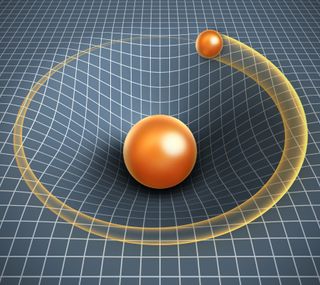
- Mass distorts spacetime: Massive objects create depressions or “gravity wells” in the fabric of spacetime.
- Objects follow curved paths: Instead of being pulled by a force, objects simply follow the curvature of spacetime created by massive bodies.
- Light bends: The curved spacetime also affects the path of light, resulting in phenomena such as gravitational lensing.
- Time dilation: Gravity wells distort both time and space, causing time to pass more slowly in stronger gravitational fields.
It’s essential to note that all objects with mass, including our own bodies, contribute to the bending of spacetime, although the effect is typically only noticeable for extremely massive objects. This understanding of gravity as the geometry of spacetime, rather than a force of attraction, is a key insight of Einstein’s general relativity and has been supported by numerous observations and experiments since its formulation.
Magnetism
Nearly all of us have experienced magnetism — pulling iron filings out of the ground, and having magnets on our refrigerator door. All magnets have a “North Pole” and an opposite “South Pole.” If a magnet is broken into smaller pieces, each piece will retain both north and south poles. “Magnetic field lines” originate from the north pole and terminate at the south pole, forming closed loops. These field lines can be observed if a magnet is placed among scattered iron filings on a desktop. The Earth itself acts as a giant magnet, with magnetic poles near its geographic poles. However, these magnetic poles are not exactly aligned with the geographic poles, and can shift over time.
 Iron filings show the magnetic lines of force around a horseshoe magnet
Electricity
Nearly all humans also experience electricity — We witness lightning in the sky, we own an electric lamp, and/or we have gotten a shock from static electricity. We did not learn that electricity and magnetism are intertwined until we took Physics in High School. In physics, magnetism and electricity are unified into a single force — the electromagnetic force.
Most of us think that electricity is the movement of electrons through a copper wire — e.g., from a wall outlet connected by a cord to a lamp. But that is not really what happens.
The electrons in a wire do move, but very slowly. It’s important to note that while electrons do move, their motion is not what directly powers electrical devices. The electrons themselves do move inside electric wires, but their movement (“drift velocity”) is extremely slow, typically about 8.4 centimeters per hour for Direct Current (DC) circuit wires. In Alternating Current (AC) circuit wires, the electrons oscillate back and forth over very small distances, less than half the width of a human hair.
The electric “force” (also called electric “power” or “electric energy”) moves (“propagates”) at the speed of light. The energy transfer occurs through electromagnetic fields surrounding the wires. This energy flows at the speed of light, which explains why electrical devices appear to turn on instantly when a switch is flipped, despite the very slow movement of electrons in the wire.
Chemistry Happens When Atoms Share Electrons
Electrons do not circle in orbits around the nucleus of an atom; they are in “clouds,” i.e., “probability distributions” around the nucleus — the exact location of every electron is “fuzzy.”
But this doesn’t affect chemistry. Chemistry has always been primarily based on the sharing of electrons between adjacent atoms, although this is not the only type of chemical interaction that occurs. The sharing of electrons is a fundamental concept in chemistry, particularly in covalent bonding.
- Covalent Bonding:
- This is the primary form of electron sharing between atoms.
- Atoms share one or more pairs of electrons to achieve a stable electron configuration.
- Examples: H2, O2, H2O, and CO2
- Metallic Bonding:
- In metals, electrons are shared in a “sea of electrons” among many atoms.
- This explains properties like electrical conductivity and malleability.
- While electron sharing is crucial, chemistry also involves:
- Ionic Bonding:
- Electron transfer rather than sharing.
- One atom gives up electrons to another, forming oppositely charged ions.
- Example: NaCl (table salt)
- Intermolecular Forces:
- Interactions between molecules that do not involve direct electron sharing.
- Examples: hydrogen bonding, van der Waals forces
- Coordinate Covalent Bonding:
- A special type of covalent bond in which both shared electrons originate from one atom.
- Important in complex ions and some molecules.
Atoms can share more than one pair of electrons. This phenomenon is known as multiple covalent bonding, and it occurs in many molecules. There are two main types of multiple covalent bonds:
- Double bonds: Two atoms share two pairs of electrons. For example, in the oxygen molecule (O2), the two oxygen atoms share two pairs of electrons to form a double bond.
- Triple bonds: Two atoms share three pairs of electrons. A notable example is the nitrogen molecule (N2), where the two nitrogen atoms share three pairs of electrons, forming a very strong triple bond.
Multiple covalent bonds play a crucial role in determining molecular structure and reactivity. They often result in stronger bonds between atoms and can influence the geometry and properties of molecules.
For instance, the triple bond in N2 (nitrogen) makes it a very stable molecule, contributing to its inert nature.
The Four Fundamental Forces:
1. The Strong nuclear force (now called the “Strong “Interaction”) confines quarks into protons.
2. The Weak nuclear force (now called the Weak “Interaction”) is the mechanism of interaction between subatomic particles that is responsible for the radioactive decay of atoms: The weak interaction participates in nuclear fission and nuclear fusion.
3. The Electromagnetic force (often called “Electromagnetism”) — It is an interaction that occurs between particles with electric charge via electromagnetic fields. It is the dominant force in the interactions of atoms and molecules. Electromagnetism can be thought of as a combination of electrostatics and magnetism, which are distinct but closely intertwined phenomena.
4. The force of Gravity
Modern Physicists have shown that the first three Fundamental Forces are really unified into one. Physicists have been trying to show that gravity is also part of the One Unified Force, but as of 2025, they have not been able to do so.
The “Standard Model” of Particle Physics
In the 1960s, we learned that atoms were composed of Protons, Neutrons, and Electrons. But things have gotten way more complicated since then:
> Protons are composite particles made up of quarks and gluons.
> Quarks combine to form particles called hadrons, the most stable of which are protons & neutrons, both found in the atomic nuclei of atoms
> Gluons play a crucial role in holding protons together by mediating the strong nuclear force between quarks. These massless elementary particles act as the “glue” that binds quarks into groups, forming hadrons such as protons and neutrons.
Specifically, a proton contains three valence quarks: two “up-quarks” and one “down-quark.” These quarks are held together by the strong interaction force, mediated by gluons.
However, the internal structure of a proton is more complex than just three quarks:
- The three valence quarks contribute only about 1% of the proton’s mass. Valence quarks give hadrons their stable characteristics.
- The majority of the proton’s mass stems from the binding energy of quantum chromodynamics, which encompasses the kinetic energy of the quarks and the energy of the gluon fields.
- In addition to the valence quarks, protons contain “sea” quarks that constantly pop in and out of existence.
- At higher energies, protons can exhibit more complex structures. Some experiments have observed a five-quark arrangement called a pentaquark.
- In very high-energy collisions, the proton can appear as a cloud made up almost entirely of gluons.
The exact composition of a proton can vary depending on the energy scale at which it is probed, making it a highly dynamic and complex particle.
The “Standard Model of Particle Physics” is the scientific theory describing three of the four known fundamental forces (electromagnetic, weak interaction, and strong interaction – but excluding gravity) in the universe and classifying all known elementary particles. It was developed in stages throughout the latter half of the 20th century, through the work of many scientists worldwide, with the current formulation being finalized in the mid-1970s upon experimental confirmation of the existence of quarks. Since then, the discovery of the top quark (1995), the “tau neutrino” (2000), and the Higgs boson (2012) have added further credence to the Standard Model.
Although the Standard Model is believed to be theoretically self-consistent and has demonstrated success in providing experimental predictions, it leaves some physical phenomena unexplained, and so falls short of being a complete theory of fundamental interactions. For example, the Standard Model does not fully explain why there is more matter than anti-matter, does not incorporate the whole theory of gravitation as described by general relativity, and does not account for the universe’s accelerating expansion as possibly described by dark energy (unexplained energy) or dark matter.
The development of the Standard Model was driven by theoretical and experimental particle physicists. The Standard Model is a paradigm of a quantum field theory for theorists, exhibiting a wide range of phenomena, including spontaneous symmetry breaking, anomalies, and non-perturbative behavior. It is used as a basis for building more exotic models that incorporate hypothetical particles, extra dimensions, and elaborate symmetries (such as supersymmetry) to explain experimental results at variance with the Standard Model, such as the existence of dark matter and “neutrino oscillations.” (“My head is spinning!” — JX Mason.)
How Do Particles “Carry” Forces?
Note: The word “Carry” appears to be borrowed from standard English. It is an inexact adjective. The physicists who chose the word “carry” could have chosen “mediate,” “transport,” or “link.”
Perplexity: Force-carrying particles, also known as “mediator particles” or “gauge bosons,” are fundamental particles that transmit forces between matter particles in quantum field theory. These particles act as the mediators of the basic interactions in nature, allowing particles to interact with each other by exchanging discrete amounts of energy. It’s important to note that the concept of force-carrying particles is a quantum mechanical phenomenon and doesn’t directly translate to macroscopic interactions.
The Standard Model of particle physics recognizes that each of the four fundamental forces is associated with its own “force-carrying” particle:
- The Strong nuclear force (interaction) is “carried” by gluons.
- The Weak force (interaction) is carried by W and Z bosons
- The Electromagnetic Force is carried by photons.
- Gravitational force: Theoretically carried by gravitons (not yet observed)
Exchanges of these particles occur at the subatomic level and help explain how fundamental forces (interactions) operate in the quantum world. For example, Quarks in atomic nuclei exchange gluons, which are responsible for the strong nuclear force that binds them together.
These force-carriers work by being exchanged between interacting particles. For example, when two electrically charged particles interact, they exchange “virtual photons,” which results in the electromagnetic force between them.
“Virtual” photons are referred to as “virtual“ because they do not exist as free particles in the traditional sense but instead serve as intermediate particles in the exchange of force between other particles. They are responsible for the electromagnetic force that holds matter together, making them a key component in our understanding of the physical world.
Virtual photons can be thought of as fluctuations in the electromagnetic field, characterized by their energy, momentum, and polarization. These fluctuations allow electrically charged particles to interact with each other by exchanging virtual photons. The electromagnetic force between two charged particles can be understood as the exchange of virtual photons between them. These photons are constantly being created and destroyed, and the exchange of these virtual photons generates the electromagnetic force responsible for the interaction between charged particles. (See Wikipedia)
“Readers, did you get all that? No, neither did I.” — JXM
What About the “Higgs Boson?”
The Higgs boson is distinct from other force-carrying particles. The Higgs boson is associated with the Higgs field, which is responsible for giving mass to other elementary particles. Unlike other force carriers, it doesn’t mediate a fundamental force but rather interacts with particles to grant them mass. The Existence of the Higgs Boson was confirmed by experiments at the CERN Large Hadron Collider in 2012 and 2013.
“Readers, this is another concept that sails over my head.” – JXM
Electromagnetic Waves
Earlier, we discussed mechanical waves, which require a medium through which the wave can propagate and travel, such as water waves on a pond. In contrast, Electromagnetic waves can propagate through a vacuum and do not require a medium. Electromagnetic Waves result from oscillations in electric and magnetic Fields. (We discuss Fields below.) Electromagnetic Waves include:
- Light
- Radio waves
- X-rays
- Microwaves
- Ultraviolet (UV) waves
- Gamma rays
Electromagnetic waves can propagate through a vacuum without requiring a medium, unlike mechanical waves such as sound or water waves. This unique property is a result of the intrinsic nature of electromagnetic waves and their components.
Electromagnetic waves consist of oscillating electric and magnetic fields that are perpendicular to each other and to the direction of wave propagation. These waves are created by the vibration of electric charges. The propagation of electromagnetic waves in a vacuum occurs through the following mechanism:
- A changing electric field generates a changing magnetic field.
- This changing magnetic field, in turn, creates a changing electric field.
- This process of mutual induction between electric and magnetic fields continues, allowing the wave to propagate without the need for a medium.

A linearly polarized electromagnetic wave around the Z-axis, moving in the V-direction, with E denoting the electric field, and the perpendicular B denoting the magnetic field.
In a vacuum, electromagnetic waves travel at the speed of light, approximately 3.00 x 10^8 meters per second (often represented by the symbol ‘c’). This speed is constant in a vacuum and represents the maximum speed at which information can travel in the universe. It’s important to note that electromagnetic waves do not lose energy as they travel through a perfect vacuum. In the absence of interactions with particles or other fields, these waves can theoretically propagate indefinitely. The behavior of electromagnetic waves in a vacuum is described by Maxwell’s equations, which provide a mathematical framework for understanding the relationships between electric and magnetic fields and their propagation through space.
Wave-Particle Duality
The “Wave-particle duality” holds that particles, such as electrons and photons, can exhibit both wave-like and particle-like properties depending on the experimental setup. The significance of wave-particle duality lies in its ability to describe reality using a “wave function,” which is at the heart of quantum mechanics.
During the 19th and early 20th centuries, light was found to behave as a wave, and later it was discovered to exhibit a particulate behavior. Additionally, physicists observed that electrons exhibited particle-like behavior in early experiments, only to later discover that they also possess wavelike properties. The concept of “duality” emerged to describe these apparent contradictions.

Quantum Mechanics, a.k.a., Quantum Physics
Note: In Physics, “mechanics” has nothing to do with machines or car-repairmen, But it does convey the concept of “how it works.”
Quantum mechanics is the study of matter and its interactions with energy on the scale of atomic and subatomic particles. By contrast, classical physics explains matter and energy only on a scale familiar to human experience, including the behavior of astronomical bodies such as the moon. Classical physics is still widely used in modern science and technology. However, towards the end of the 19th century, scientists discovered phenomena (particularly micro-phenomena) that classical physics could not explain. The desire to resolve inconsistencies between observed phenomena in molecules and atoms, and Newton’s classical theory, led to a revolution in physics, a shift from the original Newtonian Physics paradigm to the development of the modern Quantum Mechanics paradigm.
Quantum mechanics can describe many systems that classical Newtonian physics cannot. Classical physics can describe many aspects of nature at an ordinary (macroscopic and optical-microscopic) scale, but it is not sufficient for describing them at very small submicroscopic (atomic and subatomic) scales. Most theories in classical physics are valid at macroscopic and optical-microscopic scales and can be derived from quantum mechanics as an approximation.
Quantum mechanics helps us understand chemistry because it explains how atoms interact with each other and form molecules. Many remarkable phenomena can be explained using quantum mechanics, like superfluidity. For example, if liquid helium is cooled to a temperature near absolute zero and then placed in a container, it spontaneously flows up and over the rim of its container! This is an effect that cannot be explained by classical physics.
Quantum mechanics is the foundation of all quantum physics, which includes quantum chemistry, quantum field theory, quantum technology, and quantum information science.
Quantum Entanglement — “Spooky Action at a Distance”
Another important example of counter-intuitive events is the Quantum Entanglement of two or more particles. Quantum entanglement is a fundamental phenomenon in quantum physics where two or more particles become intimately linked, sharing a collective quantum state that cannot be described independently. This means that a measurement made on one particle will correlate with a measurement on a second particle if the two particles have a shared history. This linkage will apply even if the two particles have moved far away from each other. The two particles remain in a “collective quantum state” and they cannot be described independently. Albert Einstein had great difficulty with this concept. He called it, “Spooky action at a distance.”
This connection persists regardless of the distance between the entangled particles, leading to correlations in their measured properties that cannot be explained by classical physics. Quantum entanglement remains a central concept in quantum mechanics and is actively studied for its potential applications in quantum technologies. Entanglement arises from the connection between particles, similar to how complex behaviors emerge in human dance partnerships. “Spooky action at a distance” was Einstein’s way of expressing doubt that two particles could remain entangled across vast galactic distances.
Key aspects of quantum entanglement include:
- Superposition: Entangled particles exist in a superposition of states until measured, meaning their properties are not determined until observation.
- Non-locality: The entangled state persists even when particles are separated by large distances, seemingly violating classical ideas about locality.
- Correlation: Measurements of one particle of an entangled pair instantly affect the state of the other, regardless of distance.
- Resource for quantum technologies: Entanglement is considered a physical resource that can be used for quantum computing, cryptography, and communication.
The Heisenberg Uncertainty Principle
Many aspects of quantum mechanics are counterintuitive. They can seem paradoxical because they describe behavior quite different from that seen at larger scales. Features of quantum mechanics often defy simple explanations in everyday language.
One example of this is the Uncertainty Principle, which says that precise measurements of a sub-atomic particle’s position cannot be combined with precise measurements of the particle’s velocity.
The Uncertainty Principle, also known as Heisenberg’s Indeterminacy Principle, is a fundamental concept in Quantum Mechanics. It states that there is a limit to the precision with which certain pairs of physical properties, such as position and momentum, can be simultaneously known. In other words, the more accurately one property is measured, the less accurately the other property can be known.
More formally, the uncertainty principle is any of a variety of mathematical inequalities asserting a fundamental limit to the product of the accuracy of certain related pairs of measurements on a quantum system, such as position and momentum. Such paired variables are known as complementary variables or canonically conjugate variables. First introduced in 1927 by German physicist Werner Heisenberg, the formal inequality relating the standard deviation of position and the standard deviation of momentum was derived by Earle Hesse Kennard later that year and by Hermann Weyl in 1928.
The quintessentially quantum mechanical uncertainty principle comes in many forms other than position–momentum. The energy–time relationship is widely used to relate quantum state lifetime to measured energy widths but its formal derivation is fraught with confusing issues about the nature of time. The basic principle has been extended in numerous directions; it must be considered in many kinds of fundamental physical measurements.
The Heisenberg uncertainty principle states that it is impossible to simultaneously determine both the exact position and momentum (which is related to speed) of a particle with arbitrary precision. This fundamental limitation arises from the wave-like nature of particles at the quantum scale. The uncertainty principle implies a trade-off between the precision of position and momentum measurements. As we increase the accuracy of measuring one property, the uncertainty in the other property increases.
This “mystery of physics” is not due to limitations in measurement techniques, but rather an inherent characteristic of quantum systems.
The uncertainty principle can be understood (to physicists, at least) from three perspectives:
- Wave-particle duality: Particles exhibit wave-like properties at the quantum scale. Precisely defining a particle’s position requires a localized wave packet, which necessarily involves a superposition of many different momentum states.
- Measurement disturbance: The act of measuring a particle’s position inevitably affects its momentum, and vice versa. This is often illustrated by the thought experiment of using high-energy photons to locate an electron, which would significantly alter the electron’s momentum.
- Mathematical consequence: The uncertainty principle arises from the mathematical formalism of quantum mechanics, specifically the non-commutativity of position and momentum operators.
It’s important to note that the uncertainty principle is not about measurement inaccuracy or limitations of instruments. Rather, it reflects a fundamental aspect of nature at the quantum level, where the very concepts of exact position and momentum simultaneously have no meaning. The Heisenberg uncertainty principle can be demonstrated experimentally through various methods. Several experiments have been conducted to verify and illustrate this fundamental concept of quantum mechanics, including the Double Slit Experiment, below.
The Double-Slit Experiment
A coherent light source (e.g., a laser) aimed at a barrier with two parallel slits. A Light passing through the slits creates a pattern on a screen behind the barrier.
The key findings of the experiment are:
- When both slits are open, an interference pattern appears on the screen, indicating wave-like behavior.
- But the interference pattern persists even when particles (like photons or electrons) are sent through the slits one at a time!
- When detectors are placed at the slits to observe which slit each particle passes through, the interference pattern disappears, suggesting particle-like behavior.
These results reveal the strange nature of quantum mechanics, where particles can exhibit both wave-like and particle-like properties depending on whether they are observed. This phenomenon, known as wave-particle duality, is a cornerstone of quantum theory and has profound implications for our understanding of reality at the subatomic level.
Fields and Field Theory
A field in physics is a physical quantity, represented by a scalar, vector, or tensor, that has a value for each point in space and time. An example of a scalar field is a weather map, with the surface temperature described by assigning a number to each point on the map. A surface wind map assigns an arrow to each point on the map that states both the wind speed and direction at that point is called a vector field, or rank-1 tensor field. An electric field is another rank-1 tensor field. Electrodynamics can be formulated in terms of two interacting vector fields at each point in spacetime, or a “single-rank 2-tensor“ field.
Types of Fields:
- Gravitational Field: Describes the force experienced by masses due to gravity.
- Electric and Magnetic Fields: Describe forces acting on charges and magnetic materials, respectively.
- Electromagnetic Field: Unifies electric and magnetic fields and carries energy independently.
In quantum field theory, quantum fields describe fundamental particles as excitations of underlying quantum fields. For example, the electromagnetic field is quantized into photons, while the Higgs field gives particles mass.
Fields are not directly observable but can be inferred from their effects, such as forces on objects or energy transfer. They are essential for modern physics, providing a framework for understanding interactions at both macroscopic and microscopic scales.
Field Theories
Field Theories are mathematical descriptions of how field values change in spacetime. Field theories are ubiquitous in physics.
In the modern framework of quantum field theory, even without referring to a test particle, a field occupies space, contains energy, and its presence precludes a classical “true vacuum.”. This has led physicists to consider electromagnetic fields to be physical entities, making the field concept a supporting paradigm of the edifice of modern physics.
In practice, the strength of most fields diminishes with distance, eventually becoming undetectable. For instance, the strength of many relevant classical fields, such as the gravitational field in Newton’s theory of gravity or the electrostatic field in classical electromagnetism, is inversely proportional to the square of the distance from the source (i.e., they follow Gauss’s law).
Fields Versus Waves
- Fields are spatial distributions of forces or energy that can act on objects. They represent the potential for interaction at every point in space. Examples include electric fields, magnetic fields, and gravitational fields.
- Waves, on the other hand, are propagating disturbances that transfer energy through a medium or space. They represent the dynamic behavior of fields changing over time and space.
The key differences between fields and waves are:
- Nature: Fields are static or dynamic distributions of force or energy, while waves are propagating disturbances.
- Propagation: Fields can exist without propagation, such as the static field around a permanent magnet. Waves, by definition, involve the propagation of energy or information.
- Time dependence: Fields can be static or time-varying, whereas waves are inherently time-dependent phenomena
- Energy transfer: While fields represent potential energy, waves actively transfer energy from one point to another
- Mathematical description: Fields are often described by vector or scalar functions in space, while waves are typically defined by wave equations involving both space and time variables.
In electromagnetism, the concepts of fields and waves are closely intertwined. Electromagnetic waves arise from the oscillation and propagation of electric and magnetic fields. When electric charges oscillate or accelerate, they create changing electric and magnetic fields that propagate through space as electromagnetic waves. It’s important to note that in quantum field theory, fields are considered more fundamental, and particles (including those that make up waves) are viewed as excitations of these underlying fields.
Types of Radiations – Including heat, light, nuclear, x-ray, radio, sound, & gamma.
Electromagnetic Radiation. Light is an electromagnetic radiation. Also, light can be interpreted as a flow of photons. All electromagnetic radiations (waves) are composed of photons — visible light, x-rays, and gamma rays. All electromagnetic radiation consists of photons, which are discrete packets of energy that exhibit both wave-like and particle-like properties. The key difference between radio waves and other forms of electromagnetic radiation lies in the energy of their constituent photons. Radio waves have photons with the lowest energies in the electromagnetic spectrum. This low energy results in radio waves having longer wavelengths and lower frequencies compared to other forms of electromagnetic radiation.
In physics, electromagnetic radiation (EMR) is the set of waves of an electromagnetic (EM) field, which propagate through space carrying momentum and electromagnetic radiant energy.
Electromagnetic radiation consists of electromagnetic waves, which are synchronized oscillations of electric and magnetic fields. In a vacuum, electromagnetic waves travel at the speed of light. In the vacuum, different wavelengths of the electromagnetic spectrum are produced depending on the frequency of oscillation. In homogeneous, isotropic media, the oscillations of the two fields are, on average, perpendicular to each other and perpendicular to the direction of energy and wave propagation, forming a transverse wave(“z” in the diagram below):
A linearly polarized electromagnetic wave going in the z-axis, with E denoting the electric field and perpendicular B denoting magnetic field.
The Example of Radio Waves:
Radio waves are a type of electromagnetic radiation with the lowest frequencies and the longest wavelengths in the electromagnetic spectrum, typically characterized by frequencies below 300 gigahertz (GHz) and wavelengths greater than 1 millimeter, approximately the diameter of a grain of rice. Radio waves with frequencies above approximately 1 GHz and wavelengths shorter than 30 centimeters are referred to as microwaves. Like all electromagnetic waves, radio waves travel at the speed of light in a vacuum and at a slightly lower speed in the Earth’s atmosphere. Radio waves are generated by charged particles undergoing acceleration, such as time-varying electric currents. Naturally occurring radio waves are emitted by lightning and astronomical objects and are part of the blackbody radiation emitted by all warm things.
Radio waves are generated artificially by an electronic device called a transmitter, which is connected to an antenna, which radiates the waves. They are received by another antenna connected to a radio receiver, which processes the received signal. Radio waves are very widely used in modern technology for fixed and mobile radio communication, broadcasting, radar, radio navigation systems, communications satellites, wireless computer networks, and many other applications.
Radio waves are non-ionizing radiation, which means they do not have enough energy to separate electrons from atoms or molecules, ionizing them, or breaking chemical bonds, causing chemical reactions or DNA damage. The primary effect of radio waves being absorbed by materials is to heat them, similar to the way infrared waves are radiated by sources of heat, such as a space heater or a wood fire. The oscillating electric field of the wave causes polar molecules to vibrate back and forth, increasing their kinetic energy and, consequently, the temperature (this is how a microwave oven cooks food). Radio waves have been applied to the body for over 100 years in the medical therapy of diathermy, which is used to promote deep heating of body tissue and increase blood flow and healing. More recently, they have been used to create higher temperatures in hyperthermia therapy and to kill cancer cells.
Quantum Computing
Unlike classical computers that use binary bits (0 or 1), quantum computers leverage quantum phenomena such as superposition and entanglement to perform calculations. This unique approach enables quantum computers to explore multiple solutions in parallel, potentially solving certain types of problems exponentially faster than traditional computers.
Key Features of Quantum Computing
- Qubits: The fundamental unit of quantum information, capable of representing both 0 and 1 simultaneously.
- Superposition: Allows qubits to exist in multiple states at once, enabling parallel processing.
- Entanglement: A quantum phenomenon that connects qubits, allowing for complex computations. (Alas, Quantum Computing is another imponderable! — JXM)
Dark Matter
Dark Matter seems to have little to do with our short, Earthly, human lives. – JXM
In astrophysics, dark matter is an invisible and hypothetical form of matter that does not interact with light or other electromagnetic radiation. Dark matter is implied by gravitational effects, which cannot be explained by general relativity unless more matter is present than can be observed. Such effects occur in the context of the formation and evolution of galaxies, gravitational lensing, the current structure of the observable universe, the mass distribution in galactic collisions, the motion of galaxies within galaxy clusters, and the cosmic microwave background.
Dark Energy
Dark Energy also seems to have little to do with our short, Earthly, human lives. – JXM
Dark Energy acts as an “anti-gravity” force, pushing the universe apart and counteracting the attractive force of gravity. Evidence for dark energy was found in the late 1990s when astronomers observed that the expansion of the universe was accelerating rather than slowing down.
In physical cosmology and astronomy, dark energy is a proposed form of energy that affects the universe on the largest scales. Its primary effect is to drive the accelerating expansion of the universe. Dark energy dominates the universe, accounting for 68% of the total energy in the present-day observable universe, while dark matter and ordinary (baryonic) matter contribute 26% and 5%, respectively. Other components, such as neutrinos and photons, are nearly negligible.
The first observational evidence for the existence of dark energy came from measurements of supernovae. “Type 1.a.” supernovae have constant luminosity, which means that they can be used as accurate distance measures. Comparing this distance to the redshift (which measures the speed at which the supernova is receding) shows that the universe’s expansion is accelerating. Prior to this observation, scientists thought that the gravitational attraction of matter and energy in the universe would cause the universe’s expansion to slow over time. Since the discovery of accelerating expansion, several independent lines of evidence have been discovered that support the existence of dark energy.
The exact nature of dark energy remains a mystery, and many possible explanations have been theorized. The leading candidates are a cosmological constant (representing a constant energy density filling space homogeneously) and scalar fields (dynamic quantities having energy densities that vary in time and space) such as quintessence or moduli. A cosmological constant would remain constant across time and space, while scalar fields can vary.
String Theory
Let’s close this Essay on the Mysteries of Modern Physics with “String Theory,” which is about as far from our everyday human lives as we can get. (Your author, J.X. Mason, finds String Theory incomprehensible — See the drawing of a “string theory manifold” at the top of this Essay!)
“In Physics, string theory is a theoretical framework in which the point-like particles of particle physics are replaced by one-dimensional objects called strings. String theory explains how these strings propagate through space and interact with one another. On distance scales larger than the string scale, a string acts like a particle, with its mass, charge, and other properties determined by the vibrational state of the string. In string theory, one of the many vibrational states of the string corresponds to the graviton, a quantum mechanical particle that carries the gravitational force. Thus, string theory is a theory of quantum gravity… Because string theory potentially provides a unified description of gravity and particle physics, it is a candidate for a “Theory of Everything,” a self-contained mathematical model that describes all fundamental forces and forms of matter. Despite much work on these problems, it is not known to what extent string theory describes the real world or how much freedom the theory allows in the choice of its details.” — Wikipedia
___________________________________________________________
Footnote to this Essay:
- Bejan, Adrian (2000). Shape and structure, from engineering to nature (1 publ. ed.). Cambridge: Cambridge Univ. Press. ISBN 978-0-521-79388-9. See also, Bejan (2016) Life and evolution as physics. Communicative & Integrative Biology, 9(3), e1172159.